An Overview of Fencing
Fencing is the recreational sport of swordplay that can be enjoyed by people of any age, and offers a multitude of benefits. Fencing is both a physical and a mental workout, in which fencers learn to hone their strategies against opponents of varying skill levels, and build up physical endurance, agility, and accuracy.
Why Fence?
- Physical Fitness: Improves coordination, agility, and endurance.
- Mental Focus: Often called "Physical Chess," it requires strategic thinking.
- Discipline: Instills sportsmanship and respect.
The three weapons of fencing are foil, saber, and epeé. The object of fencing is to score a point or touch by hitting your opponent’s target with your weapon before they get the scoring touch on you.
The Foil
Traditionally, the foil was the weapon duelists used to train. Due to its small target area and strict rules, if a student starts with foil, it is easier to learn the techniques and strategies of the saber or epeé later.
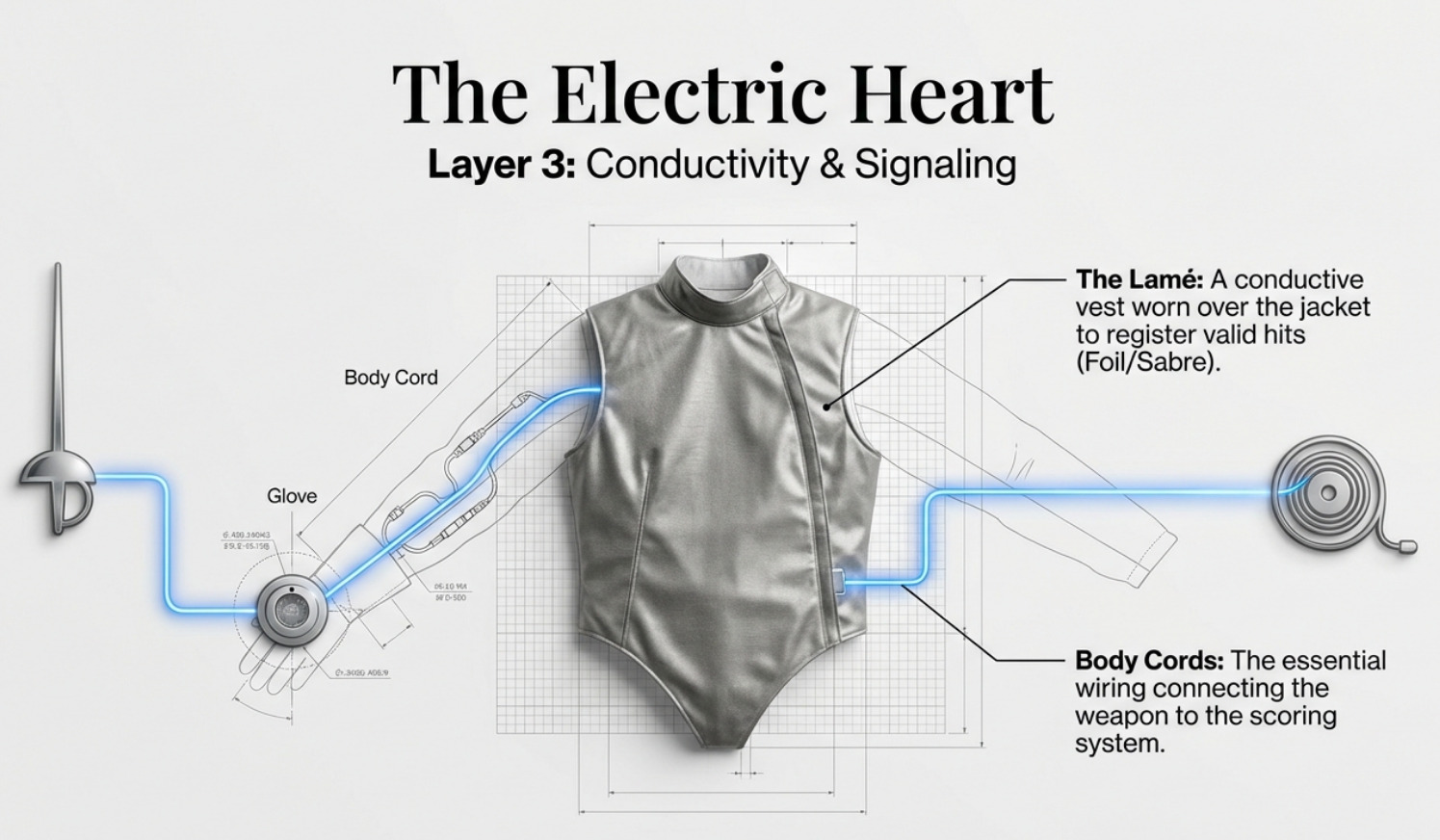
A touch with a foil is scored with the point of the weapon, and the target is the torso (front and back). Foil fencing is a balance of offensive and defensive strategies, and adheres to rules of right-of-way.
Right-of-way rules determine which fencer’s maneuver had priority. For example, a defensive block and response hit, called a “parry-riposte,” takes priority over a direct attack. In foil, off-target hits stop the action but score no points.

The Sabre
In saber, fencers can score when any part of their blade hits the valid target area (head, arms, or body above the waist). Saber fencers usually “cut” or “slash” with the blade.
Modern saber fencing is derived from cavalry techniques used in the Napoleonic Era. Like foil, saber adheres to right-of-way rules but follows a more aggressive strategy. Movement is rapid and bouts are short.
Unlike foil, an off-target hit in saber does not halt the action. You only have milliseconds to react! Saber fencing is what children naturally emulate, imagining themselves as pirates or knights.

The Epee
(Pronounced: EP-ay) Epeé fencers must score with the point of the weapon against any part of the opponent’s body, hands and feet included.
Epeé was the traditional dueling weapon where "first blood" meant victory. Consequently, there are no right-of-way rules. The strategy is a patient, psychological game to strike while avoiding being hit.
Simultaneous touches result in both players gaining a point. The defense has a significant advantage, and bouts tend to involve complex mental games and feints.

Common Terms
Fencing terminology is largely French. Here are the essentials every beginner should know:
French for "Go." The command used by the referee to start the action.
French for "On Guard." The command to take your fencing stance before the bout begins.
The command to stop fencing immediately.
The fencing strip (playing area), typically 14 meters long and 1.5 meters wide.
French for "Touched." Used to acknowledge a hit by the opponent.
A defensive action used to block or deflect an opponent's attack.
An offensive action made immediately after a successful parry.